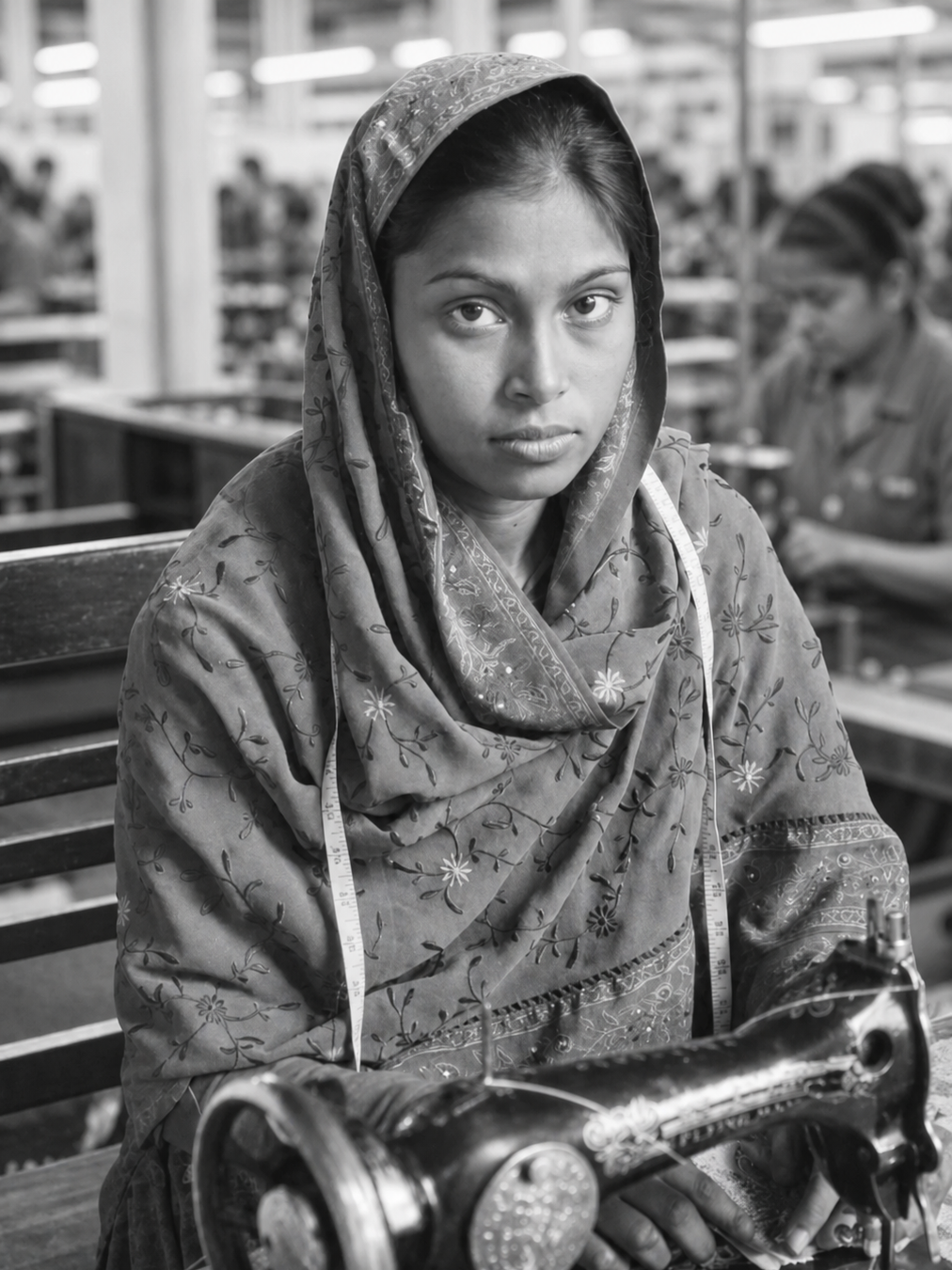
Women make up 40 per cent of the global supply chain workforce, an estimated 180 million people. They are the majority in some of its most demanding sectors, and among the least protected in all of them.
In garments, women comprise nearly 60 per cent of workers globally, rising to 80 per cent or more in some regions. In electronics, women account for 55.67 per cent of the global workforce and significantly more where production is concentrated.
In Vietnam, women make up nearly two thirds of all electronics workers; on assembly lines, that share reaches 80 per cent.
These are not footnotes. They are the women workers holding global supply chains together.
Our Industry
Our Approach
-
The Impact of Safety on Business
Safety is not a cost to be absorbed. It is a risk eliminated, a liability removed, and a workforce retained.
This is an investment for the world's most discerning industries, brands, and suppliers and a measure of their excellence.The numbers are unambiguous.
Workplace harassment drives absenteeism, tardiness, and disengagement.
• Deloitte estimates the productivity loss from sexual harassment alone at $2.62 billion. Workplace violence costs industry an estimated $130 billion globally each year in turnover, legal liability, and lost output.
• A landmark study tracking nearly 50 million consumer mobile devices found that each percentage point rise in assembly line worker turnover increased product field failures by up to 0.79%, with costs running into hundreds of millions of dollars.
• Replacing a single worker costs between half and twice their annual salary. Across supply chains where women are the majority, and where turnover driven by unsafe conditions is endemic, these are not marginal costs. They are structural.
Safety is not a cost to be absorbed. It is a risk eliminated, a liability removed, and a workforce retained. This is an investment for the world’s most discerning industries, brands, and suppliers and a measure of their excellence.
-
Rather than measuring the incidence of violence, Dignity Index Global measures the presence of safety —creating a positive, forward-looking standard that industry can build toward, report on, and be recognised for.
Dignity Index Global grounds its framework in ILO Convention 190 and Recommendation R206, the first international treaty to address violence and harassment in the world of work, alongside Human Rights Due Diligence as defined by the UN Guiding Principles on Business and Human Rights. As mandatory humanrights due diligence legislation accelerates across global markets, the ability to demonstrate measurable safety across supply chains is no longer a reputational advantage. It is a legal and commercial imperative. Our framework is designed precisely for this moment, giving industry the indicators, evidence, and reporting infrastructure to meet that obligation with confidence, and to go beyond it with distinction.
Our approach is structured around five interconnected commitments:
• Global Safety Indicators: Grounded in ILO C190/R206 and Human Rights Due Diligence obligations under the UN Guiding Principles on Business and Human Rights, the indicators are adaptable to local contexts and realities.
• Scorecard: A new metric for the industry: measures safety, not only violence, establishing a baseline that can be tracked, reported on, and improved over time. It includes a risk assessment tool that identifies vulnerabilities before they escalate into harm or liability.
• Leadership360: Hands-on coaching that builds the capacity of manufacturers and lead firms to embed safety at every level, shifting the industry’s orientation from violence as norm to safety as practice.
• Blueprint: A co-created, multi-stakeholder roadmap for achieving the safety indicators. Practical, contextualised, and designed to be owned and led from within.
• App: An AI-powered, multilingual platform for anonymous and secure worker safety surveys, designed to give workers a trusted, confidential voice in their own language.
We track progress across the full supply chain, holding every tier accountable and demonstrating, over time, that safety is a measure of industry excellence, not merely compliance.